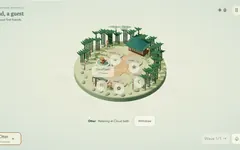
Build a comfort before filling every seat
Misty Bathhouse · Check both the guest preference and the task. A basic bath earns coins, but it does not count as a preference match. Restore a needed comfort before sending that guest elsewhere.
 Sly Arcade
Rules and practical starting points from the games themselves.
Misty Bathhouse · Check both the guest preference and the task. A basic bath earns coins, but it does not count as a preference match. Restore a needed comfort before sending that guest elsewhere.
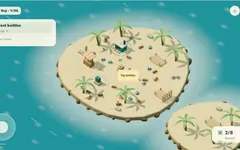
Tideline · Read the active restoration goal before collecting. A full bag of the wrong material creates extra walking.
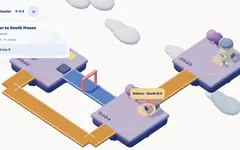
Cloud Courier · Look at the lowest arch on your planned road before filling the stack. A shorter load can reach a house with less detouring.

Ghost Inn — The Lantern Road · The main action changes with the place and your supplies. Read it after arriving instead of repeatedly clicking while still walking.
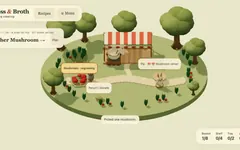
Moss & Broth · Start with the recipe rather than the nearest ingredient. Two different requested soups can share an ingredient but still need different partners.
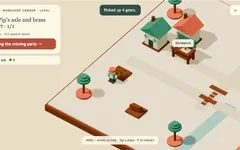
Toytown Tinker · Look at the task before filling your carrying capacity.
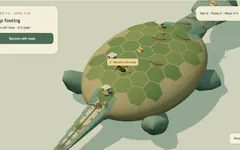
Mossback Awakening · A stubborn patch may need water before cleaning. Check the prompt instead of spending time repeating an ineffective tool.
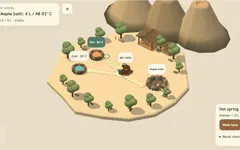
Ember Springs · Check both volume and temperature. Water at the right temperature still needs to meet the pool’s requested amount.

Lunar Salvage Works · Trace the required output back to its input. Filling a machine unrelated to the current goal uses transport space without finishing the project.
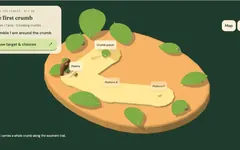
Tiny Colony · A food’s carrying requirement and a passage’s width are separate constraints. A large enough team can still be too wide for the shortest path.
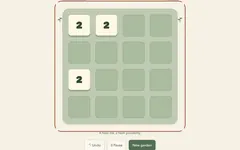
Cozy 2048 · Choose a corner for larger tiles and keep a consistent direction.
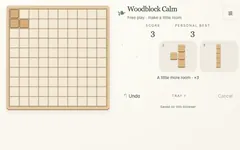
Woodblock Calm · Look at all available pieces before placing the first one.

Cascade Isles · Follow the starting direction through each tile. An arrow leaving a tile must reach a valid input on its neighbor.
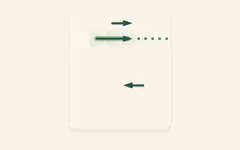
Arrow Escape · Read direction at the head, not from the longest section of a winding body. Follow that head’s straight lane to the board edge.
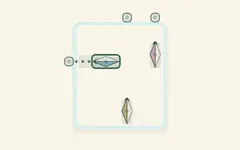
Paperboat Harbor · An open cell in front of a boat is only the beginning. The entire boat must travel through clear space to the matching exit.
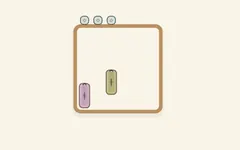
Drawer Unwind · Work backward from the exit. Decide which item blocks the final line, then look for room along that item’s own axis.

Dismantle Desk · Brass means correct in the teach stages; green means "looks safe", which is not the same thing.

Lying Lawn · Start from the corners and edges you can only reach one way — they decide the route.

Dial Desk · Painted gaps look almost right — if the bolt jams, that gap was fake.
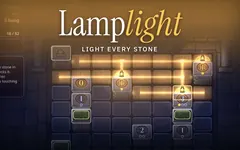
Lamplight · Start from numbered plinths with only one legal neighbour set.
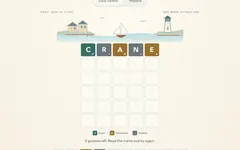
Harbor Words · Each clue corresponds to this guess, including how many copies of a letter the answer contains.
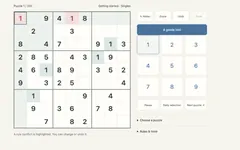
Classic Sudoku · A note records an option, not a commitment. If a cell sees 1, 2, 4, 5, 6, 7, 8 and 9 in its row, column or box, its only candidate is 3. Read all three units before filling it.
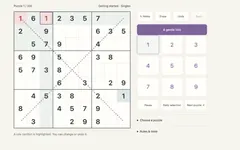
Diagonal Sudoku · Only the two marked corner-to-corner diagonals apply. A smaller parallel diagonal has no special rule. Select a diagonal cell and compare its ordinary units with the marked diagonal.
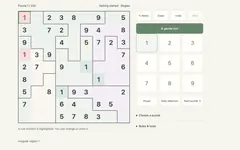
Jigsaw Sudoku · A thick outline encloses one nine-cell region, even when the region bends across where a familiar box would have ended. Row and column rules still apply. Ordinary 3 × 3 boxes do not.
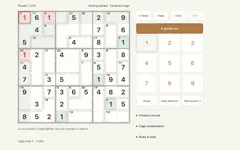
Killer Sudoku · A two-cell cage totaling 3 contains 1 and 2, in some order. A cage totaling 10 does not make every sum-to-10 pair available: any digit excluded by a row, column or box is unavailable in that cell.
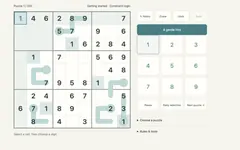
Thermo Sudoku · Digits strictly increase from the filled round bulb along the drawn path. Bends do not reset the order. On a four-cell thermometer the bulb is at most 6 and the tip is at least 4.
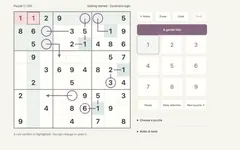
Arrow Sudoku · For a circle containing 5 with a two-cell shaft, the shaft may contain 1+4 or 2+3 in a legal order. The circle itself is not part of the sum. Start at the circle and follow the arrow tip.
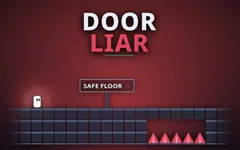
Door Liar · A pause button in the left corner is not the real pause button.
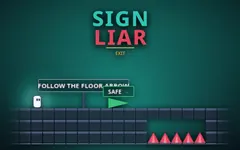
Sign Liar · Read the line of text at the top of each level; it hints at how many signs are honest.
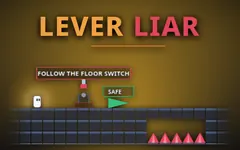
Lever Liar · Pull a lever from a safe spot first and watch the room before you commit to a jump.
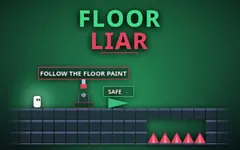
Floor Liar · Matching colours between floor marks and exits can be a matched lie.
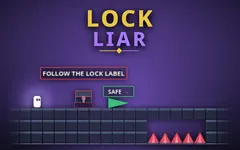
Lock Liar · Try the key that the level seems to discourage.
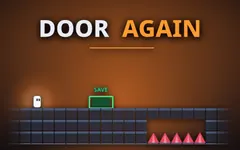
Door Again · When the narrator and a door agree, be twice as careful.
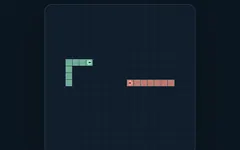
Loop Duel · Count the open space ahead of your turn. A narrow corridor can be safe now and trap you later.
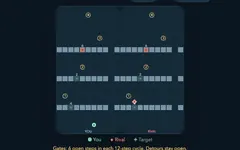
Gate Sprint · Gate numbers show the current phase. Check whether the next entry will be open before committing to the crossing.

Orbit Clash · A shorter radius moves faster, but a beacon on another ring still needs a visible connector.

Pulse Relay · Ownership is marked with a gold ring. Sending is unavailable while a projectile is already in flight.
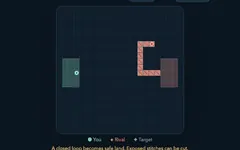
Zone Weave · An open loop does not capture land. Cells still connected to the board edge remain neutral.

Mirror Run · Every obstacle row leaves at least one opening. Use the preview to choose the next lane early.
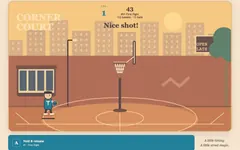
Hoop Bounce · A stronger shot does not always give a better approach to the rim.

Beat Trail · Watch where the next ring sits: before a gap or after a low arch the timing differs from a block.
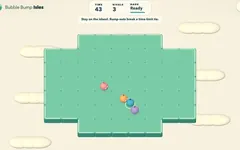
Bubble Bump Isles · Approach rivals from the island’s safer side.

Paint Surf · Three starting doses do not cover a long route. Seal useful fresh tiles, then plan a return to your own striped buoy before running dry.
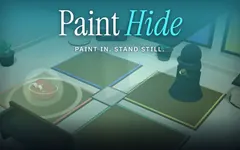
Paint Hide · The hunter ignores you when you match an active mat, even inside its light.
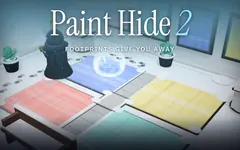
Paint Hide 2 · Stone and rugs wipe your trail — use them between snow stretches.

Keep the Light · Do not leave both lamps burning at the edges — they gutter out after about a minute.